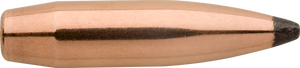
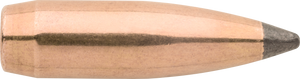
Sierra GameKing 22 Cal 62 Gr Spitzer Boat Tail Bullets (.224 Diameter)
$32.23
- Capacity-Rounds:
- 100
- Grain:
- 62
- Quantity:
- 100 Per Box
- Bullet Tip Material:
- Lead
- Core Material:
- Lead
- Jacket Material:
- Copper
- Sectional Density:
- 0.157
- Bullet Diameter:
- 0.224
- Cannelure:
- No
The Sierra GameKing 22 Cal 62 Gr Spitzer Boat Tail Bullets (.224 Diameter) are purpose-built projectiles for reloaders working with .22 centerfire rifle and handgun cartridges. These 62-grain bullets combine a spitzer profile with a boat-tail design and semi-pointed tip geometry that balances expansion characteristics with consistent accuracy across a wide range of twist rates and velocities. Whether you're loading for a vintage .22 centerfire rifle with a slower twist or a modern varmint rig, these rounds deliver predictable performance on small game and predators.
The semi-point design is the key to their versatility. Compared to a traditional spitzer tip, the exposed lead and slightly enlarged jacket opening promote faster expansion without requiring magnum velocities. This makes them especially useful in rifles where twist rates may not be ideal for conventional spitzer bullets, and they also work reliably in handgun applications where short barrels limit velocity. The shorter overall length of the semi-point geometry improves bullet stabilization in marginal twist scenarios, though this comes at the cost of a slightly lower ballistic coefficient than you'd get from a comparable full-spitzer round.
Reloaders appreciate Sierra's consistent quality and the flexibility these bullets offer across multiple platforms. The 62-grain weight and .224-inch diameter fit standard .22 centerfire cases, and the boat-tail design helps maintain downrange energy. For shooters focused on fur-bearing game where pelt preservation matters, the bullet's expansion profile is calibrated for controlled, non-explosive performance at practical hunting ranges.
Key Features
- Semi-pointed spitzer design for balanced expansion and stabilization across varying twist rates
- Boat-tail configuration for improved aerodynamics and downrange performance
- 62-grain weight in .224-inch diameter for standard .22 centerfire cartridges
- Shorter profile than conventional full-spitzer bullets improves stability in slower-twist barrels
- Generous exposed lead and enlarged jacket opening for controlled expansion
- 100 bullets per box for convenient reloading
Specifications
| Caliber | .22 Cal |
| Bullet Weight | 62 Grains |
| Diameter | 0.224 inches |
| Sectional Density | 0.177 |
| Ballistic Coefficient @ 2750+ fps | 0.298 |
| Ballistic Coefficient @ 1800–2750 fps | 0.292 |
| Ballistic Coefficient @ Below 1800 fps | 0.287 |
| Quantity per Box | 100 Bullets |
| Bullet Style | Semi-Point Spitzer Boat Tail |
Frequently Asked Questions
Will these bullets work in my slower-twist .22 centerfire rifle?
Yes. The semi-point design and shorter overall length were developed specifically to stabilize in rifles with slower twist rates that may not reliably stabilize conventional full-spitzer bullets. They also work well in modern faster-twist barrels.
Can I use these for handgun reloading?
Yes. These bullets are suitable for .22 centerfire handgun cartridges. The shorter profile and semi-point geometry can improve accuracy in handguns where twist rates may be marginal for traditional spitzer bullets.
How does the semi-point tip compare to a full spitzer for hunting?
The semi-point design expands faster than a full spitzer due to the exposed lead tip and enlarged jacket opening. This makes them well-suited for small game and varmints. However, the ballistic coefficient is slightly lower than a comparable full-spitzer bullet, so expect slightly more trajectory drop at longer ranges.
What velocity ranges perform best with these bullets?
These bullets deliver ballistic coefficients of 0.298 at 2750 fps and above, 0.292 between 1800 and 2750 fps, and 0.287 below 1800 fps. They perform across the full spectrum of .22 centerfire velocities, though faster velocities optimize aerodynamic performance.
Related Products
-

-
Nosler Ballistic Tip Varmint Bullets - 22 Cal, 55 Gr, Spitzer Boat Tail (224 Diameter)
$98.54$111.95Nosler
-
-