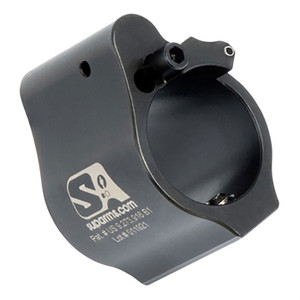
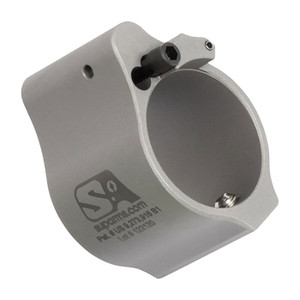
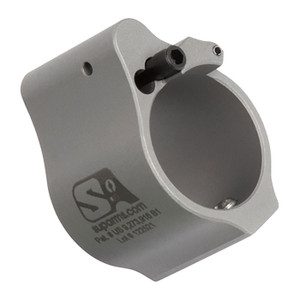
Superlative Arms Ar-15 Solid Adjustable Gas Block .750'' Stainless Steel
$103.49
The Superlative Arms AR-15 solid adjustable gas block in .750" stainless steel takes a fundamentally different approach to regulating direct impingement systems. Instead of throttling gas flow like conventional adjustable blocks, this one uses a patented "bleed off" design that lets excess pressure vent from the front of the block—sending only what you need to the bolt carrier while the rest exhausts harmlessly away. The result is a cleaner, cooler-running gun with noticeably less felt recoil, especially when running short-barreled rifles or suppressors where excess back-pressure can turn into a real problem.
What makes the Superlative design genuinely tough is attention to the details that kill ordinary adjustable blocks. The adjustment mechanism sits outside the gas block entirely, so carbon never contaminates the detent. The gas screw doesn't restrict flow, which means you won't face erosion, seizing, or loss of detent—problems that plague blocks where the screw sits in the hot zone. Thirty locked positions let you dial in the exact tuning your rifle needs, from suppressed precision loads to heavy magnum rounds. A built-in safety stop prevents the screw from backing out completely, and installation is straightforward with included set screws, roll pins, and hex keys plus a video tutorial.
Built from 416 stainless steel, this solid-attachment block is designed to survive hard use. At just 1.37 ounces and 1.00" long, it adds minimal weight while sitting low enough to clear most rail systems. Whether you're tuning a rifle for competition, suppressed hunting, or just chasing a smoother shooting experience, the bleed-off principle delivers tangible improvements in control and longevity that justify the upgrade from a fixed or conventionally adjustable block.
Key Features
- Patented bleed-off design vents excess gas instead of restricting flow—cleaner, cooler operation
- Thirty locked adjustment positions for precise tuning to your load and configuration
- Adjustment mechanism mounted outside the block—no carbon contamination, no detent loss
- Gas screw doesn't restrict flow—eliminates erosion and seizing issues
- Ideal for suppressed and short-barreled rifle use where back-pressure is a concern
- Safety stop prevents accidental full removal of adjustment screw
- 416 stainless steel construction for durability
- Solid attachment type for secure mounting
Specifications
| Brand | Superlative Arms |
| Barrel Diameter | 0.750" |
| Material | 416 Stainless Steel |
| Weight | 1.37 oz |
| Length | 1.00" |
| Attachment Type | Solid |
| Adjustment Positions | 30 locked positions |
| Bleed Off Port Location | Front of block |
| Adjustment Screw Location | Front of block |
Frequently Asked Questions
What comes in the box?
The Superlative Arms gas block ships fully assembled with two 10-32 x 3/16" set screws, one gas tube roll pin, and a 3/32" x 6" L-shaped hex key for installation. You'll also get printed instructions and a QR code that links to a video tutorial.
How does bleed-off design differ from standard adjustable gas blocks?
Traditional adjustable blocks restrict gas flow through the screw itself. The Superlative design instead bleeds excess gas out the front of the block, delivering only the pressure needed to cycle the bolt carrier. This approach runs cooler, cleaner, and eliminates the erosion and carbon buildup that eventually freezes or weakens the adjustment mechanism in conventional designs.
Will this work with suppressed guns or short-barreled rifles?
Yes. The bleed-off port specifically addresses the excessive back-pressure problem that arises when running suppressors or SBRs, venting that pressure safely away from the bolt carrier. This makes it an excellent choice for tuning suppressed or short-barrel configurations.
Is the adjustment mechanism prone to carbon buildup?
No. Because the adjustment detent and screw are mounted outside the gas block proper, carbon doesn't accumulate in the adjustment mechanism. The gas screw also doesn't function as a flow restrictor, so there's no erosion risk and no loss of detent from carbon deposits—a common failure point in other adjustable designs.