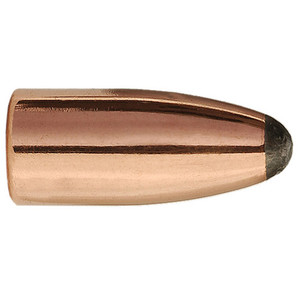
Sierra Varminter .224 Caliber 40-Grain Hornet Bullets - 100 Count
$29.89
- Capacity-Rounds:
- 100
- Caliber-Gauge:
- 22 Caliber
- Grain:
- 40
- Style:
- Round Nose Hornet
- Bullet Diameter:
- 0.224
- Bullet Tip Material:
- Lead
- Cannelure:
- No
- Core Material:
- Lead
- Jacket Material:
- Copper
- Quantity:
- 100 Per Box
- Recommended Usage:
- Varmint
- Sectional Density:
- 0.114
- Weight:
- 40 gr
The Sierra Varminter .224 caliber 40-grain Hornet bullets are purpose-built for reloaders working with modest-velocity cartridges like the .22 Hornet, .22 K-Hornet, and .218 Bee. This 100-count box of rifle bullets features Sierra's traditional roundnose design paired with a thin-walled jacket and soft core—a combination engineered to deliver reliable expansion and accuracy on small varmints when fired in the 2600–2900 fps velocity range these cartridges typically deliver. If you're handloading for older, tighter-twist barrels (like 1-in-16-inch twist rates), these short bullets provide the stability you need without sacrificing precision.
Beyond Hornet-family cartridges, the Varminter profile works well in medium-capacity centerfire rifles like the .222 Remington and .223 Remington when you're targeting varmints or shooting on the range at velocities up to 3500 fps. The thin jacket and exposed lead construction make these bullets equally at home in centerfire .224 handguns, where they transition from modest-velocity expansion at Hornet handgun speeds to aggressive performance at higher rifle velocities. Reloaders appreciate Sierra's reputation for consistency—each bullet is formed to exacting standards, and the roundnose geometry is known for delivering solid accuracy, especially at short to moderate ranges where varmint hunting typically happens.
Whether you're loading for a vintage .22 Hornet rifle, a tack-driving .223 Remington build, or exploring handgun loads, these 40-grain Varminters give you a reliable, field-proven projectile. Sierra's no-frills approach to bullet design means you get decades of proven performance at a fair price—no marketing fluff, just bullets that expand when they should and group where you aim them.
Key Features
- Thin-walled jacket with soft core for reliable expansion on small varmints
- Traditional roundnose profile suited to modest-velocity cartridges and tighter twist rates
- Effective in .22 Hornet, .22 K-Hornet, and .218 Bee at 2600–2900 fps
- Also performs well in .222 Remington and .223 Remington up to 3500 fps
- Suitable for both rifle and centerfire handgun applications
- 100 bullets per box for handloaders and reloading enthusiasts
- Proven accuracy at short to moderate ranges
Specifications
| Caliber | .224 |
| Grain Weight | 40 |
| Bullet Shape | Roundnose |
| Jacket Type | Thin-walled |
| Count per Box | 100 |
| Recommended Velocity Range | 2600–3500 fps (varies by cartridge) |
Frequently Asked Questions
Will these .224 40-grain bullets work in my .223 Remington?
Yes. While these Varminters are optimized for lower-velocity Hornet-family cartridges, they perform well in .223 Remington when loaded for varmint shooting or target use at velocities up to 3500 fps. They are a short bullet design well-suited to faster twist rates and deliver the expansion and accuracy you need for small game at typical varmint ranges.
Are these bullets safe for handguns?
Yes. The thin jacket and exposed lead construction make these .224 Varminters suitable for centerfire .224 handguns. Performance varies with velocity—at Hornet handgun speeds they expand as varmint bullets; at higher velocities they behave more aggressively. Always start loads safely and work up carefully.
What barrel twist rate do these bullets need?
These short-profile roundnose bullets are ideal for 1-in-16-inch twist barrels, common in older Hornet rifles. They also stabilize well in faster twist rates like those found in .223 Remington and .222 Remington barrels, making them versatile for a range of reloading applications.
How many bullets are in a box?
Each box contains 100 Sierra Varminter bullets, giving reloaders a standard quantity for handload batches and experimentation.