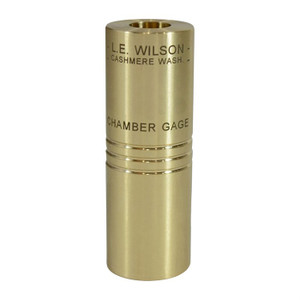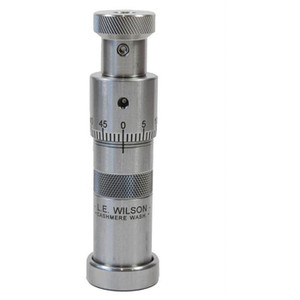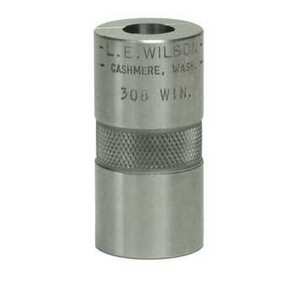

The L.E. Wilson 300 AAC Blackout case holder is a precision reloading tool built to stabilize rifle brass during trimming, primer pocket work, and deburring operations. If you're loading 300 Blackout—whether for subsonic suppressed shooting, hunting, or range work—this case holder supports your brass the way a rifle chamber does, giving you the repeatability and consistency that separate quality hand-loads from mediocre ones. The holder's chamber-like design means your cases stay centered and supported, not just gripped, so every operation produces uniform results across your entire batch.
L.E. Wilson case holders are manufactured to tight tolerances, and they're available in versions matched to your brass condition: FIRED holders are sized for neck-sized cases, while NEW holders work with unfired brass or full-length sized cases. If your brass mix varies or you're not sure which you have, a universal version fits both, so you don't need to guess or buy multiple tools.
Whether you're running a one-station trimmer or a full progressive setup, having the right case holder transforms case prep from a frustrating bottleneck into a straightforward, repeatable step. For 300 Blackout handloaders who care about consistency, this is a tool that pays for itself in accuracy and saved time.
Key Features
- Chamber-like design supports case body for consistent, repeatable positioning
- Precisely manufactured for tight tolerances and uniform results
- Suitable for trimming, primer pocket reaming, neck reaming, and deburring operations
- Designed specifically for 300 AAC Blackout brass
Frequently Asked Questions
What's the difference between FIRED and NEW case holders?
FIRED holders are sized for neck-sized cases, while NEW holders are designed for unfired brass or cases that have been full-length sized. If you work with mixed brass or are unsure which you have, a universal version accommodates both types.
What operations can I use this case holder for?
The L.E. Wilson case holder supports trimming, primer pocket reaming, neck reaming, and deburring—all the case prep work that demands precise, centered positioning.
Why does the chamber-like design matter?
By supporting the case body the way a rifle chamber does, rather than just clamping it, the holder keeps your brass centered and consistent through every operation, resulting in uniform case prep across your entire batch.