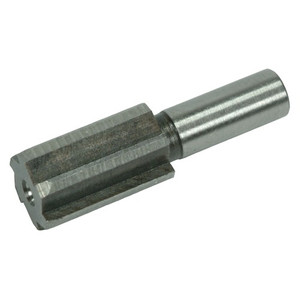
The Forster Neck Reamer #220 is a precision inside neck reaming tool built for reloaders who demand consistent case prep and tight ammunition tolerance. If you're working with .220" diameter cartridges and notice bullet seating resistance in fired case necks, this reamer cuts excess brass cleanly and efficiently—a critical step before sizing. Hand reaming gives you control over wall thickness that mass-production can't match, and it's the foundation of accurate, repeatable handloads.
Forster engineered this reamer from high-grade, wear-resistant tool steel ground to .0025" to .003" over maximum bullet diameter. The staggered tooth design cuts brass smoothly without chatter, delivering a clean interior finish that promotes consistent bullet fit and seating. This is the kind of precision that shows up downrange as tighter groups and fewer flyers.
The workflow is straightforward: after firing a loaded round, test-fit a bullet into the unsized neck. If you feel drag or resistance, the neck needs reaming. Always ream after firing but before sizing operations—that's when excess brass is at its worst and the case body hasn't been worked. A tubing micrometer lets you dial in exact wall thickness if you want to dial in your process, though the interference test is simple and effective for most reloaders.
Whether you're a benchrest shooter chasing tenths or a hunter building match-grade ammunition, inside neck reaming elevates your case preparation game and rewards precision-focused reloading with measurable results.
Key Features
- High-grade, wear-resistant tool steel construction for durability and longevity
- Staggered tooth design for smooth, chatter-free cutting action
- Ground to .0025" to .003" over maximum bullet diameter for precise brass removal
- Removes excess neck brass before sizing for consistent bullet fit
- Hand-reaming control over wall thickness for ammunition consistency
Specifications
| Product Name | Forster Neck Reamer #220 |
| Diameter | .220" |
| Material | High-grade, wear-resistant tool steel |
| Design | Staggered tooth |
| Grinding Tolerance | .0025" to .003" over maximum bullet diameter |
| Category | Inside neck reaming tool |
Frequently Asked Questions
When should I ream case necks in my reloading process?
Neck reaming is performed after cases have been fired with a full load and before the neck or full-length sizing operation. This timing ensures you're removing excess brass when it's most problematic and before the rest of your case prep sequence.
How do I know if my cases need neck reaming?
The simplest test is to slide a bullet into a fired, unsized case neck. If you feel interference or resistance, the neck has excess brass and should be reamed. You can also measure wall thickness with a tubing micrometer for more precise control over the process.
What does the .0025" to .003" grinding tolerance mean?
The reamer is ground to cut brass slightly over the maximum bullet diameter—between .0025" and .003" larger. This ensures it removes excess brass and achieves consistent wall thickness without cutting too aggressively or leaving material behind.
Is this reamer suited for precision or match-grade handloading?
Inside neck reaming is a hallmark of precision reloading. By controlling case neck wall thickness and ensuring consistent bullet fit, this tool supports the tight tolerances demanded by benchrest, competition, and long-range hunting ammunition.