AR-15 Complete Uppers: A Step-by-Step Buyer's Guide to Gas Systems, Twist Rates, and Handguards
Get To The Points
- What Is a Complete AR-15 Upper, Exactly?
- Gas Systems: Matching Length to Purpose
- Twist Rates: Why That Number on the Barrel Matters
- Handguards: Free-Float, Attachment Systems, and Length
- Matching the Upper to the Job
- What to Check Before You Buy and AR-15 Complete Upper
- 5 Complete Uppers Worth a Look
- Bottom Line
- FAQs
What Is a Complete AR-15 Upper, Exactly?
If you've spent any time shopping for AR-15 parts, you already know the rabbit hole is deep. Barrels, gas blocks, bolt carrier groups, handguards, muzzle devices. Building an ar-15 complete upper piece by piece can turn into a part-time job. That's exactly why complete uppers exist, and why more shooters are skipping the parts list altogether and dropping a finished upper straight onto their lower.
Whether you're building your first AR, adding a second upper for a different role, or just tired of chasing compatible parts, here's what you actually need to know before you buy.
A complete upper receiver group is everything above the receiver pin: upper receiver, barrel, gas system, handguard, bolt carrier group, and charging handle. All of this is assembled, headspaced, and ready to drop onto any mil-spec AR-15 lower. Pin it, drop in your takedown pins, and you're at the range.
The appeal is simple: no guesswork on parts compatibility, no torque specs to second-guess, and no waiting on five different vendors to ship five different parts that may or may not play nice together. You're buying a finished, tested assembly instead of a project.
That said, "complete" doesn't mean "one-size-fits-all." The AR-15 complete upper you want for a home-defense carbine looks nothing like the one you want for 600-yard steel. That's where gas systems, twist rates, and handguards come in.
Gas Systems: Matching Length to Purpose
The AR-15's gas system length determines how the rifle cycles, and it has a real effect on felt recoil, reliability, and barrel length options.
Pistol-length systems are built for short barrels. Think 7" to 10.5" and are common on AR pistols and short-barreled rifles. They cycle fast and hard, which means more felt recoil and more wear over time, but they make short-barrel builds possible.
Carbine-length is the most common system on the market, typically paired with 14.5" to 16" barrels. It's the standard for duty and home-defense guns because it balances reliability with manageable recoil.
Mid-length systems run a longer gas tube, usually with 16" barrels, and give you a smoother, softer cycling action than carbine-length. A lot of shooters consider mid-length the sweet spot for a 16" general-purpose rifle. Less recoil, less bolt wear, same reliability.
Rifle-length systems are the longest gas system option, traditionally paired with 20" barrels. They produce the softest recoil impulse of the bunch, which is part of why they've stayed popular on precision and DMR-style builds despite carbine-length dominating the market.
If you're not sure which to pick, match the gas system to your barrel length first. Running a barrel too short for its gas system (or vice versa) is one of the more common causes of reliability issues in home builds.
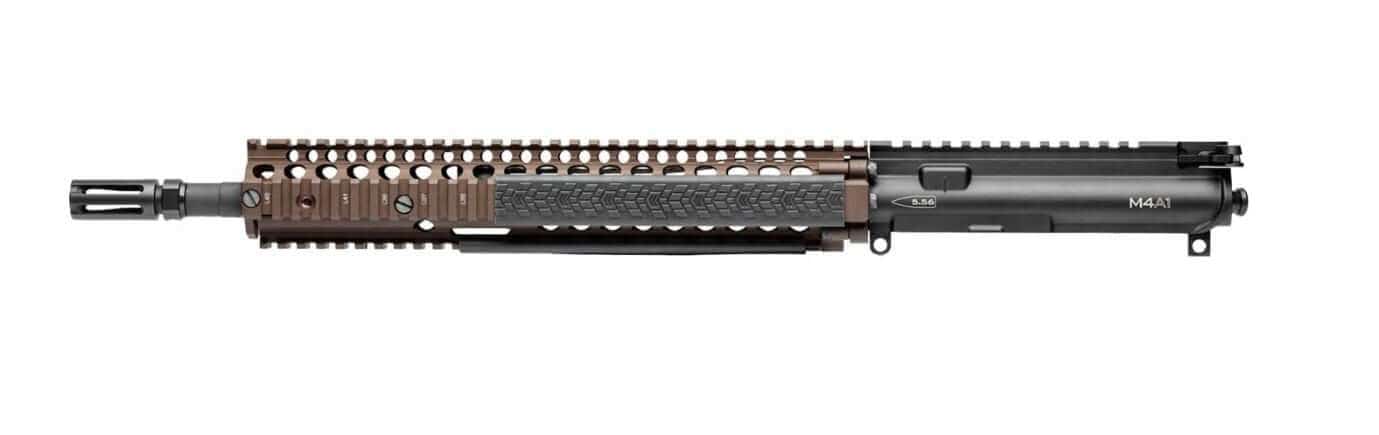
Daniel Defense M4A1 FSP RIS II Free Float Quad Rail Handguard - Extended Carbine Length Aluminum for AR-15
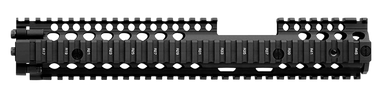
$501.00
The Daniel Defense M4A1 FSP RIS II Free Float Quad Rail Handguard brings military-proven modularity to your AR-15. Born from a SOCOM requirement for the...… read more
View ProductTwist Rates: Why That Number on the Barrel Matters
Every AR-15 barrel is marked with a twist rate. Something like 1:7, 1:8, or 1:9, which tells you how many inches of barrel it takes for the rifling to complete one full rotation. A tighter twist (lower number, like 1:7) spins the bullet faster, which stabilizes heavier, longer bullets. A slower twist (higher number, like 1:9) is better suited to lighter, shorter bullets.
Here's the practical breakdown:
- 1:7 twist Best for heavier .223/5.56 bullets (69-77 grain), common on military-pattern uppers and precision builds shooting heavier match ammo.
- 1:8 twist The versatile middle ground, stabilizing a wide range of bullet weights from 55 to 77 grains. If you're not sure what you'll be shooting most, this is the safest bet.
- 1:9 twist Well suited to lighter bullets (55-62 grain), a good fit for general-purpose shooting and standard ball ammo.
Get the twist rate wrong for your ammo and you'll see it in your groups. Under-stabilized bullets tumble and lose accuracy fast, especially at distance.
Handguards: Free-Float, Attachment Systems, and Length
Modern AR-15 complete uppers almost universally ship with free-float handguards, meaning the handguard attaches only to the upper receiver and never touches the barrel. This keeps barrel harmonics consistent even when you're gripping the handguard, resting it on a bag, or hanging a bipod off the front. All of which noticeably tightens up group consistency compared to older non-free-float designs.
For attachment systems, you'll mainly see two options:
- M-LOK The current industry standard. Lighter, simpler, and now the default on the vast majority of complete uppers and accessories.
- KeyMod Still available on some builds, but largely phased out in favor of M-LOK. Worth checking accessory compatibility before committing if you already own KeyMod gear.
Handguard length is a purpose decision. Shorter handguards (7"-9") keep the rifle lighter and quicker to maneuver. Good for home defense or three-gun. Longer handguards (12"-15") give you more real estate for lights, lasers, and forward grips, and are common on designated marksman and precision-oriented builds.
Matching the Upper to the Job
Putting it together, here's how gas system, twist rate, and handguard length tend to pair up by use case:
Home defense / general purpose: Carbine or mid-length gas system, 16" barrel, 1:8 twist, 9"-13" free-float M-LOK handguard. Balanced, reliable, and versatile enough for nearly any ammo you feed it.
Long-range / precision: Rifle-length or mid-length gas system, 18"-20" barrel, 1:7 or 1:8 twist to stabilize heavier match bullets, longer free-float handguard for bipod and rest stability.
Compact / maneuverability: Pistol or carbine-length gas system, shorter barrel, 1:7 or 1:8 twist, shorter handguard. Trades some ballistic performance for speed and handling in tight spaces.
What to Check Before You Buy and AR-15 Complete Upper
A few things worth confirming before you check out on any complete upper:
- Headspace and function testing Reputable uppers are headspaced and function-tested at the factory. Confirm this is stated by the manufacturer.
- Barrel material and finish Chrome-lined barrels run cooler and last longer under sustained fire; nitride and stainless options each bring their own accuracy and longevity tradeoffs.
- Bolt carrier group included Some listings bundle the BCG and charging handle, others don't. Check before assuming your upper is truly "drop and go."
- Mil-spec compatibility Nearly all complete uppers are built to mil-spec dimensions, but it's worth a quick confirmation, especially if you're pairing with an older or proprietary lower.
5 Complete Uppers Worth a Look
Matching the framework above to real options currently in stock at Bosque Outdoors:
- Spike's Tactical STU5435MLS Complete Upper 5.56 NATO, 16" midlength barrel, 12" free-float M-LOK handguard. A textbook match for the home defense / general-purpose build: mid-length gas system, versatile 1:8-class barrel, and a handguard length that works for lights, slings, and general-purpose use.
- CMMG LR-308 Resolute 100 Mk3 Upper .308 Winchester, 16" barrel, M-LOK handguard. For shooters who want more reach and knockdown power than 5.56 offers, this is a straightforward way to add long-range capability to an AR-pattern build.
- Daniel Defense DDM4 V7 16" Upper 5.56/.223 Rem, premium duty-grade build. A step up in fit and finish for a general-purpose or duty upper, built to the same standard as Daniel Defense's rifle line.
- CMMG Banshee 100 Mk4 Pistol Upper 4.6x30mm, 8" pistol-length barrel. The compact / maneuverability option — short gas system and barrel for a lighter, quicker-handling build.
- CMMG Resolute 100 Mk4 Upper 300 AAC Blackout, 16" barrel, M-LOK handguard. A versatile 300 BLK option that runs well suppressed or unsuppressed, good for shooters who want caliber flexibility without switching lowers.
Bottom Line
An AR-15 complete upper takes the guesswork out of building or expanding your AR-15 lineup. Match the gas system to your barrel length, pick a twist rate that fits the ammo you'll actually shoot, and choose a handguard length that fits how you'll use the rifle. You'll end up with an AR-15 complete upper that runs the way you need it to from the first range trip.
Ready to build out your next upper? Shop AR-15 Complete Uppers at Bosque Outdoors and find the setup that matches your build.